
What Actually Happens to the Body with an Altitude Camp?
We all hear about the pros going off for regular altitude camps to improve their performance. But we never get to see their data to see what actually happens. While I’m no pro, here’s the details on my own altitude camp this April.

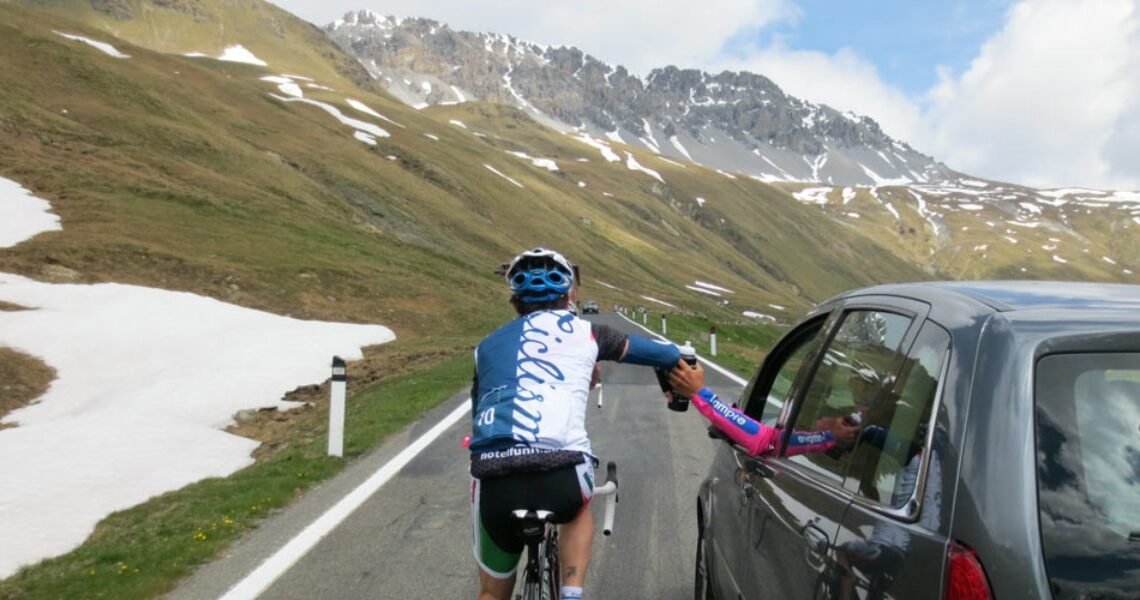
PEZ hits the heights of the Stelvio
I have no altitude background hidden in me. Born in Hong Kong and growing up there until I was seven, as far as I know I have no high altitude ancestry. And as Hong Kong is at sea level, even if I did have such ancestry, I missed the critical developmental window of pairing altitude genes with living at altitude during the first decade or so of life to really maximize that genetic expression.
I’ve lived in many places around the world through science, but nothing that would be remotely considered high altitude. My normal home base of Niagara in central Canada is about 150 m elevation, and I’ve spent the past nine months on sabbatical at ~300 m elevation in Kelowna, British Columbia.

However, this past April, science took me to Flagstaff, Arizona and Northern Arizona University for 18 days (April 13 – May 1), where I was conducting a fun study with my friends Travis Gibbons and JJ Duke. At 2,100 m (7,000 ft), Flagstaff is right in the sweet spot of altitude for altitude training camps. Indeed, think Boulder without the hype and crowds.
While I didn’t bring my bike with me, my rental was right at the base of the hill where the Lowell Observatory is situated (it discovered Pluto in 1930). It’s a trail running paradise as, once you lug your carcass up 160 m elevation or so, you have essentially endless trails to explore.
 One free day from the lab the whole trip, so we spent it hiking the Grand Canyon.
And since Travis is also an exercise physiologist, he does a lot of testing of elite athletes who do come to Flagstaff for altitude camps, so Travis offered to test me also at the start and end of my stay. Therefore, it was a perfect opportunity to do a self-experiment in how I respond both physiologically and performance-wise to altitude.
Plus, I’m writing this 8 days after returning to Kelowna, so I can also report on how my actual cycling performance has responded over the first week.
The Physiology of Altitude Training
The main tests that we did were to test for total hemoglobin mass. This involves taking blood samples before and at a set time after breathing a known amount of carbon monoxide (no I wasn’t sucking on exhaust, the amount is about the amount if you smoked a cigarette or two). Carbon monoxide binds really strongly to hemoglobin, so you can then do calculations from pre/post values to quantify the actual amount of hemoglobin. This is considered the gold standard test, as it measures absolute hemoglobin mass. In contrast, measures like standard hemoglobin testing or erythropoietin (EPO) is a concentration, so things like dehydration (which tends to happen upon initial arrival to altitude) can confound things.
Another test we did was to measure ferritin, which is a molecule that your body uses to store iron – an essential building block of hemoglobin.
High on Flagstaff

Not the first time I’ve been caught lying down or napping in the lab.
Our first test was April 14, the day after arrival.
One thing to note was how high my hematocrit was, ranging 46-47%, reflecting my probably being pretty dehydrated from travel and altitude. Normal values for males are in the lower 40s. Remember that, pre-EPO tests, male cyclists >50% hematocrit were shelved for 14 days for “health” reasons (i.e., we can’t prove you doped, but this was the best we can do).
My ferritin levels was 43.6 ng/mL. Normal male ranges are 15-300. I don’t take iron supplements or really alter my diet, but many athletes would do so well before and throughout an altitude camp.
And the big reveal. My total hemoglobin mass (tHb) was 909 g. At 68 kg, this works out to 13.37 g/kg, which is a bit above the typical male endurance athlete range of 12.8-13.1 g/kg (elite endurance athletes might reach >14 g/kg. So I was already at a good baseline.
Flagstaff Finale

The mob scene at the end of our final trial.
Our final test was April 30, so 16 days later.
Over my stay, my hematocrit dropped back to a more “normal” 42%, reflecting my compensating for the initial dehydration.
My ferritin dropped down to 33.3 ng/mL. Some of this may be measurement variability, but some of this may be due to my body releasing iron.
But the big reveal again was that my tHb actually dropped slightly by 23 g, from 909 down to 886 g. Again some of this may be test-to-test variability. But more likely, my high baseline level meant that I was already at my physiological ceiling, so there wasn’t much room for improvement.
Strava Chasing
I ended up hitting a hilly Strava segment trail running up by Lowell 5 times during my stay. It’s a 1.15 km segment up the second half of the trail, with 64 m elevation gain.

April 15. 10:32. 6 km. Oh man this sucked. I was also huffing and puffing walking home with groceries for about 5 days.
April 18. 8:22. 7 km. Still huffing and puffing, but that was a crazy improvement.
April 21. 7:51. 12 km. Breathing a bit better. But I titled this run “Hardest run of my life no question” reflecting the altitude, hills and rocky trail terrain.
April 24. 7:38. 11 km. Nice!
April 27. 7:24! 11 km. I also titled this 11 km run “Possibly BEST run of my Life!” reflecting that I no longer felt like I was breathing through a straw, and felt great the entire run.

The first hill run with my MSc student Kristina was an eye opener!
Performance Adaptation without Physiological Adaptation?
So summing up, even if we toss the first April 15 run, I still saw a steady ~15 s improvement each run every 3 days from the 18th-27th. This happened without any increase in tHb. How? Remember that physiology is just one component of performance. In this case, it likely came down to respiratory adaptation, in that the discomfort of breathing reduced over time, which enabled me to run faster at the same rating of perceived exertion.
Sea Level Performance
I’ve hit the bike pretty hard since my return. My rides May 2-6 were honestly really ho-hum. My durability was also pretty rubbish, starting to fade pretty badly at about the 50 km mark on my two longer rides and crawling home. Indeed, I kinda crashed energy-wise May 7-8 and bailed on intended rides/runs. This reflects the general anecdotal evidence from elite athletes of a lot of variability and even rubbish performance the first week post-altitude.

No ride is rubbish when you’re with your sweetie!
May 9 I joined my UBC colleague Brian Dalton’s Saturday club ride. It was the longest, hilliest, and hardest ride of 2026. Whereas I faded after 50 km previously, I felt strong and full of energy the entire ride, even pushing really hard the final 15 km after peeling off from the group.
Summary
Altitude camps are everywhere when it comes to pro endurance athletes, but we rarely get the chance to see what actually happens. I hope this self-experiment case study gives you some insight into what actually happens over the course of an altitude camp!
Ride fast and far, and have fun!
• Read more Training tips in the PEZ ToolBox
The post What Actually Happens to the Body with an Altitude Camp? appeared first on PezCycling News.