

Paul Seixas lit up Il Lombardia with a climbing performance that raises big questions for 2027. But beyond the Frenchman’s breakthrough, cycling faces familiar challenges: an overcrowded calendar, competing championships and riders with limited influence over the sport’s future. This week’s AIRmail from The Outer Line connects the racing headlines with the business and governance decisions shaping pro cycling.
Analysis, Insight, and Reflections from The Outer Line.
# Catch up on pro cycling – and its context within the broader world of sports – with AIRmail … Analysis, Insight and Reflections from The Outer Line. You can subscribe to AIRmail here, and check out The Outer Line’s extensive library of articles on the governance and economics of cycling here. #
Key Takeaways:
● Seixas Takes First Major Victory at Lombardia
● Season (Mostly) Comes to a Close
● Tight Finishes In Bike Races
● Baseball Teeters Towards a Strike
● Gravel Worlds Finish Down Under

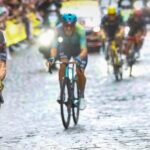
After nearly six hours of racing around the picturesque shores of Lake Como over the weekend, 20-year-old Paul Seixas closed out the 2026 season by winning its final major race, Il Lombardia. The scale of what Seixas did on Saturday is hard to overstate, considering how his display of raw climbing strength left the sport’s best one-day riders with no answers. With Pogačar absent, the sport’s best one-day riders had their clearest shot at Lombardia in six years, yet a rider who spent the vast majority of the season as a teenager, in just his second pro season, simply rode every one of them off his wheel. Indeed, he did so without even leaving the saddle on the race’s hardest climb. Newly crowned European champion Remco Evenepoel, Vuelta winner Enric Mas, Lidl-Trek’s in-form Giulio Ciccone, Tom Pidcock, and a UAE team built to win this race weren’t outfoxed or caught napping; they were simply outclassed on the climbs that decided the race.
 Pogacar took his first of 5 consecutive wins at Lombardia 2021
Have we entered the “Seixas Era” of pro cycling? While that is too lofty an expectation to place on a rider who still isn’t old enough to order drinks in a U.S. restaurant, it is safe to say this puts us in uncharted territory. Pogačar didn’t win his first Monument until he turned 23, and one has to go back to 1944 to find a younger Monument winner. The fact that the sport now has a rider whose development is tracking ahead of Pogačar – the best rider the sport has ever seen – creates a potentially intriguing narrative for 2027. Among the other hungry challengers and one former winner looking for the opening to wrest yellow back from the dominant Slovenian, is it possible that Pogačar could face a truly credible rival who might spoil his quest for a sixth Tour de France overall win?
Paul Seixas lit up Il Lombardia with a climbing performance that raises big questions for 2027. But beyond the Frenchman’s breakthrough, cycling faces familiar challenges: an overcrowded calendar, competing championships and riders with limited influence over the sport’s future. This week’s AIRmail from The Outer Line connects the racing headlines with the business and governance decisions shaping pro cycling.
 Zoe van Velzen starts the Eneco Tour stage 1
Lombardia could have produced a great narrative capstone on the season, but unfortunately the calendar doesn’t actually stop in Como. The Eneco Tour (the rebranded Tour of Holland) runs through this week, and the WorldTour-level Tour of Guangxi also runs in China. All that is in addition to the UCI Gravel World Championships which took place in Australia and was mostly contested – in the pro “Elite” categories – by a collection of WorldTour, Pro, and Conti level licensed riders who were not competing in the previously mentioned events. We recognize that cycling is seasonal not just as a top-flight competitive calendar: in the southern hemisphere’s cornerstone cycling markets of Oceania and South America, for example, a collection of important amateur and Conti-level racing is a critical developmental avenue for the sport. Yet there is still far too much racing overlap and poor calendar planning; the top-level racing season sort of dribbled to the finish, when it could have enjoyed a clean and exciting ending.

On the topic of the UCI’s Gravel World Championships, one could be forgiven for not noticing it was on the calendar at all, given that it was orphaned after the Montreal road worlds and UEC championships, and competed for attention against the Tour of Lombardy last Saturday. This meant that no fewer than three UCI, national-team events were scheduled over a three week span on three different continents, each with its own logistical difficulties. More to the point, with the gravel event favoring riders who’d focused on the road all season – and on a course that featured long segments of paved road – it again all had the feel of a “dirt criterium” rather than a true gravel test. Broadcasters were optimistic that up to 130 million people would tune in for the racing, but if YouTube performance is a litmus test of actual interest (factoring for highlight clips, pirated streams, and influencer clips), the number was far less but encouraging. Still, the racing produced at least one feel good moment when Marianne Vos – who’d been left off the triumphant Dutch road team at Montreal – won the women’s elite race decisively to demonstrate that one of the sport’s most successful riders of all time still has plenty of competitive fire left in the tank.

Discussion has continued to swirl around the tight finish between Remco Evenepoel and Guilio Ciccone at the recent European championships. With a well-timed bike throw, Evenepoel bested Ciccone by a couple of millimeters, even though he was behind him just before and just after the finish line. According to the UEC, finish line cameras snap photos thousands of times per second “making it possible to determine the finishing order with extreme precision even in cases of minimal differences.” As we saw after the finish, Ciccone questioned the decision. UCI Article 1.2.099 defines the finish marking as a 72 cm white strip with a 4 cm black line in the middle, stating that the finish occurs when the front tire meets “the vertical plane rising from the starting edge of the finishing line.” However, the installation and alignment of the photo-finish equipment inevitably involve a degree of human handling, and thus small deviations may occur. The question arises, if it would be more equitable to simply declare a dead heat when the difference is below a certain threshold, perhaps a hundredth of a second? Other sports, like alpine skiing already do this. As pointed out by our colleague and cycling economics expert Prof. Daam van Reeth, “Cycling prides itself on precision, but perhaps there comes a point where acknowledging uncertainty is more accurate than pretending to measure it.” Ideas have also circulated that if a true dead heat occurs, the riders could race a one-kilometer sprint, head-to-head, but to our knowledge that has never occurred in pro racing.

The race towards the World Series is well underway, but the bigger story in Major League Baseball is the battle for its next collective bargaining agreement between the players and league owners. The current CBA expires in December, and multiple proposals and counterproposals have already been rejected by both sides in an attempt to balance economic and competitive forces. The latest proposal from the league may have serious teeth – and could also inform cycling’s stakeholders, if the UCI is serious about adopting some of the reforms mentioned in its recent report. At the heart of MLB’s proposal are two key changes: shortening the season by eight games with an adjusted playoff format, and a salary cap to control costs. The calendar change is considered long overdue, and many analysts believe the new 154 game format should be even shorter for player health and competitive interests. But the expanded playoff format (all matchups going to best-of-seven games) would significantly boost the broadcast revenue streams. As we have argued for years, a similar move in cycling to distill the calendar down to its higher-value events could result in the same broadcast value changes, if applied judiciously to a blend of subscription and free-to-air racing content.
The adoption of a salary cap in baseball will be far more contentious, though the league has made it clear that any new CBA is contingent on including one. The proposal on the table – likely to be negotiated with fiery rhetoric – will set a cap that may curtail perceived out-of-control player salaries. Owners are making the case that such high salaries detract from spending on the overall fan experience via improved stadium amenities, for example. As opposed to most of the other major American sports, the league has never had a cap and the MLB Players Association has the opposing view that any cap would be “a system that guts player rights and compensation,” essentially setting an artificial ceiling preventing star players from demanding their fair worth from the teams that can afford their value. Sports business observers will eagerly watch this CBA dance continue towards December.
Cycling has a similar urgent need to find a solution to the same problem, albeit on a much smaller absolute scale. On these points, the UCI, the teams, and the riders must develop different approaches and come to the negotiation table without reference to cycling’s traditions. First, the UCI must set aside its overstated and overplayed “European”-centric view of the sport’s governance model – that approach constrains its ability to develop the sport globally as evidenced by continual contraction of racing beyond the continent since the Brian Cookson era ended in 2017. And more salient to any negotiations, the riders must convert their “association” model into an independent union, separating itself from the UCI and any financial dependence on either the UCI or the teams. Without that independence, the riders will never have the ability to maneuver and position for their rights effectively, nor take an active position at the negotiation table. The fact that the riders lack committee votes or any real say in pro cycling’s decision-making is troubling; the current Joint Agreement is merely an elementary starting point, which has hardly changed over the last decades. A viable collective bargaining agreement requires the exercise of true athlete unity.
Hot Takes:
– Yet another scandal seems to be emerging at FIFA, where it is reported that the goalkeeper for the Democratic Republic of Congo, Lionel Mpasi, was allowed to compete in the World Cup despite him being found ineligible months before the tournament. Some pointed out that FIFA chief Infantino has a close relationship with the now-president of DR Congo’s soccer federation, Véron Mosengo-Omba – another indication that Infantino seems to be losing support and control of the organization.
– The Protect College Sports Act passed the Senate in a non-partisan 77-22 vote last week. But it faces pushback from labor groups, the NAACP, the Congressional Black Caucus, and several Republican and Democratic lawmakers over conference realignment rules, and other athlete employment interests. The bill would grant the NCAA limited antitrust exemption to help enforce rules on eligibility, transfers, and compensation. It would also increase school direct-payment limits to roughly $49 million annually and put in place a 5-year athlete eligibility window, limiting undergraduate athletes to a just one collegiate transfer.
– In his cycling newsletter , rider/journalist Joe Laverick digs into the problems at the Picnic-Post NL team, saying, “They’re sitting dead last in the men’s WorldTour rankings, and a dozen ProTeams are ahead of them. They’re sitting dead last in the Women’s WorldTour rankings. They lost €19.5m in three years. Their bike sponsor is in judicial reorganization. And it seems every rider who leaves the team significantly improves.” (That’s right, 12 ProTeams rank ahead of them.) Laverick points out that most observers blame the team’s top management, and suggests three options for them – dropping down to the ProTeam level, going all in on their women’s team, and looking for new ownership. Also cited by Laverick, and providing an in-depth analysis of the team’s situation is a recent report from the newsletter Money in Sport.
Written and Edited by Steve Maxwell / Joe Harris / Spencer Martin
THE OUTER LINE
www.theouterline.com
@theouterline
Visit our website for our latest articles and commentary. And check out our extensive Article Library for hundreds of in-depth articles about the economics, governance, structure and competition of pro cycling, organized by subject. (Advisory Group: Peter Abraham, Luke Beatty, Brian Cookson OBE, Nicola Cranmer, Prof. Roger Pielke, Jr., Dr. Bill Apollo and Prof. Daam Van Reeth.)
The post The Outer Line: Seixas Shines, Cycling’s Calendar Stumbles appeared first on PezCycling News.