
In May 2012 I was in Verona, Italy, for my own riding and for the team time trial of that year’s Giro d’Italia. At an event in the city, I was greeting by an extremely tall and quite distinguished looking Italian gentleman who grabbed my hand and introduced himself. “I am Eros Poli. I won the stage up Mont Ventoux” he said.
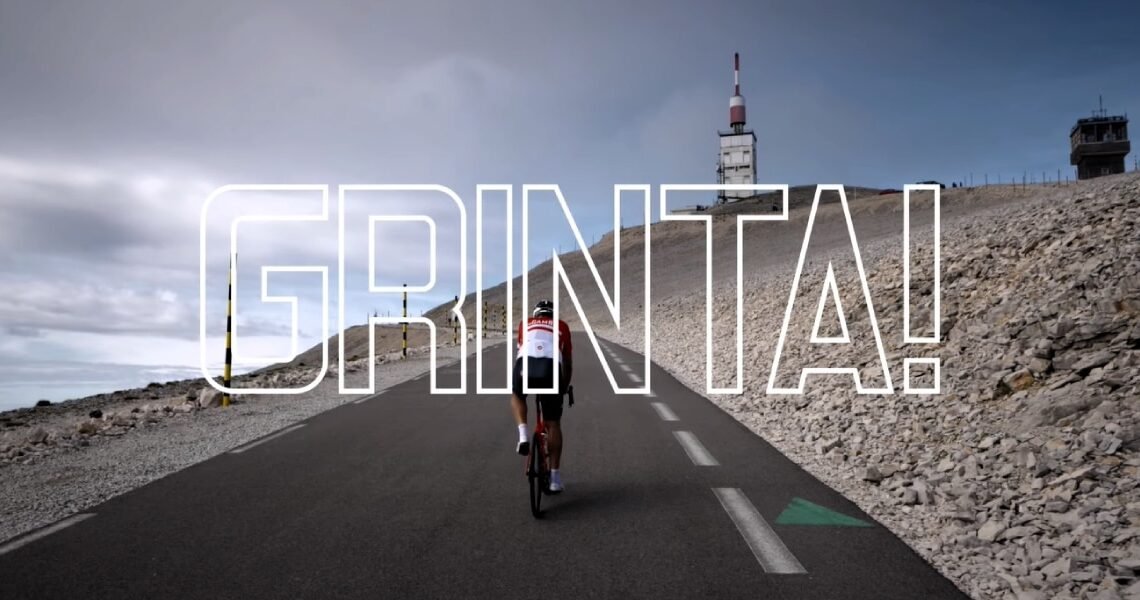
Of course I knew who he was. I was impressed that that day at the Tour de France in 1994 still meant so much to him but as a cycling fan it was also something I would never forget. Eros Poli works with the inGamba cycling touring firm these days and they have put together a wonderful documentary about him. It features his return to Mont Ventoux and reliving one of the most unexpected things to ever happen in pro bike racing.
“Grinta” is the Italian word that translates as “grit, determination and a fierce fighting spirit.” This is a good title for a film about Eros Poli who certainly demonstrated this virtue in his racing career. During the oil crisis in 1973 his father decided to get a bicycle and Eros wanted to join him so his father got one for him too. Eros still has that original bicycle. His father found the frame in the garbage and built it up and refinished it. It is no junker: a Chesini, the product of a very good Veronese framebuilder still in operation after a century.

Eros fell in love with the speed of the bike and soon was riding faster than his father and his friends. In 1977 he was introduced to track racing. At fourteen, he was already much bigger than his competitors and attracted attention from the coach of the national road racing team. As a result, he joined the Italian squad racing the four man team trial at the 1984 Olympic Games in Los Angeles. The training was very hard, sometimes with three sessions in a day, but the result was victory for the Italians. Eros Poli believed that he could have a career in cycling. Over the next three years he competed with the team at the World Championships, winning bronze, then silver and then, in 1987, gold in Villach, Austria.

Olympic Victors (Poli second left)

But after a disasterous team time trial at the Seoul Olympics in 1988, he considered giving up cycling. But things turned around when he found employment as a professional in the final year of the Del Tongo team in 1971, going on with its successor GB-MG Maglificio before signing with Mercatone Uno in 1994. In each team, his assignment was to act as a leadout man for superstar sprinter Mario Cipollini. The domestique’s role suited him well. Now at 30 with a single stage win in an Australian race in 1992 to his credit–and finishing 148th and last in the Giro d’Italia that same year–it seemed that the future would continue to hold this for him.
But then Cipollini had a big crash in the first stage of the 1994 Vuelta and Mercatone Uno arrived at the Tour de France essentially leaderless. Eros Poli had been told early on by a coach that as a big rider his best chance was to always go on the attack so now he was able to take his opportunities.
His constant breakaway efforts came to naught and he was tired after Stage 14. But on Stage 15, from Montpellier to Carpentras, he forgot about his sore legs and attacked again. Putting his skills as a time trial rider to best use, he came to the foot of Mont Ventoux solo with a 20 minute lead. At 1.94 m tall (6 foot 4 inches) and at 87 kg (191 lbs) he was nobody’s idea of a climber so the peloton was not concerned, expecting to reel him in on the slopes of the mountain. Marco Pantani, an up-and-comer and a pure climber, began to chase. But Eros Poli was never caught.
Mont Ventoux has been included in the Tour de France 18 times since 1951 and will feature for the first time in the Tour de France Femmes avec Zwift on August 7th this (coincidentally the day after Eros Poli’s birthday). It remains a challenge for anyone, professional or amateur, as one of cycling’s truly iconic landscapes.
Watching the video excerpts in “Grinta!” of that ride in 1994, one can see the suffering of the big man on the Giant of Provence. The determination to win for himself by someone who had only ridden in support of others was brilliant. Author Bill Strickland, who speaks about bike racing in the video, says: “Winning a single stage of the Tour de France is not only career-making but life-changing.”

Eros Poli would go on to race for another five years, retiring in 1999. His career victories remain at two but his career was not negligible. In addition to the amateur racing at the Olympics and the Worlds, he rode in 12 Grand Tours and 29 of the Monuments, missing out on only Liege-Bastogne-Liege.


His enthusiasm and good humour are certainly valuable assets when riding with clients of inGamba but, again quoting Strickland:
“When we look back on that stage now it’s easier to see ourselves than it is when we see Eddy Merckx win a stage or Tadej Pogacar win a stage. We have very few moments of glory but we have a lot of opportunity to show grit and what Eros did is a reminder that we can do that.”
“Grinta! The Eros Poli Story,” directed by Dean Del Calzo and Donna Crain
34:59, released to YouTube in July 2026
For more about inGamba Bike Tours, go HERE.

The post PEZ at the Movies: “Grinta! The Eros Poli Story” appeared first on PezCycling News.