

THE OUTER LINE: Fin Tarling’s death should force professional cycling to move beyond condolences and confront persistent race-safety failures. Also this week: what the Tour de France Femmes taught us about women’s cycling, Pogačar’s pursuit of the Grand Tour sweep, ASO’s growing influence, genetic testing in women’s sport and the increasingly irrational economics of professional teams.
Analysis, Insight, and Reflections from The Outer Line.
# Catch up on pro cycling – and its context within the broader world of sports – with AIRmail … Analysis, Insight and Reflections from The Outer Line. You can subscribe to AIRmail here, and check out The Outer Line’s extensive library of articles on the governance and economics of cycling here. #
Key Takeaways:
● The Fin Tarling Tragedy: How Many More?
● Lessons From This Year’s Tour de France Femmes
● Will Pogacar Complete the Grand Slam at the Vuelta?
● Controversy over Genetic Testing in Women’s Tennis
● Enhanced Games Announces Loss and Stock Value Tumbles
● Sports Team Valuations Move Beyond a Level of “Irrational Exuberance”

The tragic death of teenage British cyclist Fin Tarling two weeks ago in the Volta a Portugal has already been extensively covered and scrutinized. But – as seems to typically happen in this sport – the painful questions and continuing alarm bells that it raises are already starting to fade as cycling’s attention shifts to the Vuelta a Espana. Tarling was struck by a vehicle going the wrong direction, after it was allowed onto the course and collided with him as he raced downhill, well ahead of the “broom wagon” which signifies the last of the competitors. Almost all road races take place on public roads with a system of “rolling road closures” to protect the riders, reopening lanes only after the full peloton has passed. There are always risks and complex logistics in assuring that this system works effectively. In this instance, according to reports, after waiting for a while, the driver asked “bystanders” if it was okay to drive onto the course and then proceeded ahead uphill against the direction of the race. Police later indicated that the location where the driver entered was not manned by informed police or volunteers; they also said the driver will probably not face any charges.
At least six pro riders have died from accidents during UCI-ranked races over the past three years, and it is time to move beyond the typical “thoughts and prayers” process. Blame is easy to assign but the UCI and CPA rider’s association share the real keys for a solution here. The UCI simply has to take a stronger stand on the oversight and regulation of race organizers – rather than dithering over gear restrictions, handlebar widths, or the plethora of micro-management minutiae that have rendered its SafeR committee ineffective. Although the CPA broke out of its normally reserved mode last week to say that it was “furious” and “filled with anger” over the loss, it has again failed to really organize rider solidarity – up to and including the possibility of a rider’s strike – to force the UCI into more drastic actions. These are avoidable accidents and the fact that they continue to occur should bring great shame upon all of the key actors in this sport.
PEZ Key Takeaway:
Professional cycling’s commercial ambitions continue to outpace its governance. Bigger audiences, foreign Grand Départs and expanding sponsor investment demonstrate the sport’s potential – but Fin Tarling’s death is a grim reminder that growth means little if organizers, governing bodies and rider representatives cannot consistently protect the athletes on the road.

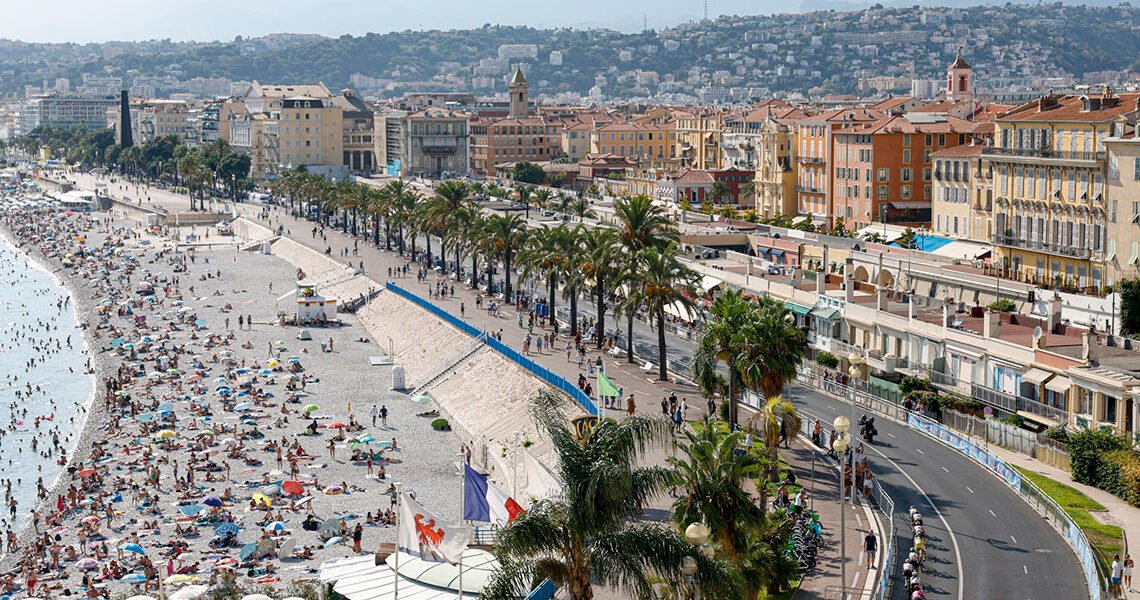
Although the 2026 Tour de France Femmes is now in the rear view mirror, its impact will be measured culturally and economically for years to come. Very little can be added to the race narrative that hasn’t already been shared, from dominant sprint wins by Lorena Weibes, to intrepid breakaway wins by Sigrid Ytterhus Haugset and Kim le Court Pienaar, and Marlen Reusser’s display of force in the Dijon time trial. That stage win by Reusser and slim lead over Demi Vollering set the tone for the race’s final act: Reusser and her Movistar teammates defending the yellow jersey, Vollering and the contenders playing cat-and-mouse to shake up the GC positions and isolate Movistar, and a final weekend marked by two very memorable stage win attacks. It started with a raid by Katarzyna Niewiadoma-Phinney to nail back a 1:09 deficit on Mont Ventoux and take yellow off of Reusser’s back, followed by Vollering’s brilliant display of tactics and confidence to win both stages that finished in Nice. That first Nice victory took the yellow from Niewiadoma-Phinney, and the second was an emphatic exclamation point on Vollering’s dominance of the race.

The true measure of the TdFF’s success is measured in dollars, not just in the storytelling that can inspire new riders and fans into cycling’s landscape. While the men’s race had mixed success and demonstrated lagging viewership again – according to the measurements in the race’s strongest traditional European markets, as shared by frequent TOL contributor Daam Van Reeth in July – the women’s race outperformed expectations. A key indicator of the race’s success was from the bellwether Australian market – a key sounding board for the sport’s performance outside of its Euro cornerstones. The men’s race, accounting for some sports viewing fatigue due to overlap with the FIFA World Cup, was 5.21 million viewers over three weeks. In contrast, the Femmes tallied 1.51 million viewers over the single week it ran. This was nearly on par with the men’s race audience pace, but the lack of full daily coverage from start to finish – including the pre- and post-race programming that is a hallmark of the men’s event – simply wasn’t offered. This probably further blunted the Femmes true viewing potential.

ASO and broadcasters will hopefully apply some of these “lessons learned” from the 2026 TdFF edition to future editions of the race, but the sport still has developmental and organizational shortcomings to overcome. As many observers, including us, have pointed out, the calendar expansion, competitive structure, and investment demands have outpaced the talent development pipeline. A bottleneck is rapidly converging at the top of the sport as the most capable racers, up-and-coming talent, and support personnel are being consolidated into just a handful of teams. This unfortunate mirroring of the men’s side of the sport, driven by sponsor demands to be competitive on the sport’s most visible French stage, in combination with the UCI’s poor calendar pacing and lapses in broadcast availability, could quickly become a growth-limiter for a women’s sport on the cusp of breaking through.

Three days into the 2026 season’s final grand tour, the Vuelta a España has already delivered a compressed version of pretty much everything that defines modern professional cycling. Tadej Pogačar, fresh off a fifth Tour de France victory, opened with a razor-thin time trial win in Monaco to take the first red jersey, and Visma flexed its collective muscle to deliver Matthew Brennan to a sprint victory in Manosque on stage 2. Then came the chaos that seems requisite in modern races: a violent hailstorm forced the outright cancellation of stage 3’s summit finish at Font Romeu, and it was Pogačar, not the race organizers, who first pulled the plug, waving the peloton to a stop and sending riders scrambling for shelter before officials caught up and neutralized the stage. Setting aside the disappointment of a cancelled stage, there is an explosive short mountain stage in Andorra looming on stage 4 and Wout van Aert and Mads Pedersen are on hand to contest everything the climbers leave behind; make no mistake, this edition will be explosive. The Vuelta has assembled a route and a cast of characters that make clear this is a race that no longer accepts third-level status, and it is coming directly for the Giro d’Italia’s spot as the second-most-important stage race of the season.

But so far at this Vuelta, the biggest takeaway is geographic. Outside of the Monaco start, the race is spending considerable time in France and Andorra, which means ASO has seen its two grand tours host foreign starts six times in four seasons (2024 Tour, 2025 Vuelta, 2026 Tour, 2026 Vuelta, 2027 Tour, 2028 Vuelta), including multiple Vuelta editions launching from Italian soil (2025 and 2028), and collecting sizable checks from local governments along the way (recent reports peg Sardinia’s payment for hosting the 2028 Vuelta’s opening stages at €7.5 million). The fact that ASO is walking into Italy and harvesting serious money that would otherwise have flowed to the country’s home grand tour says a lot about how dominant the company has become in race organization, and how much leverage it can now bring to bear on its rivals – whenever it sees fit.
The Women’s Tennis Association recently implemented genetic gender testing, starting at the recent Cincinnati Open tournament. While this is separate from the issue of trans athletes in sport, the WTA implemented this gender screening to align with IOC and U.S. policies that seek to – in the words of the WTA’s press release – “preserve the integrity of women’s professional tennis and maintain fair competition conditions for all players.” The test is for a genetic marker which indicates the presence of male biological traits in individuals assigned as female at birth. While the test is straightforward concerning biological sex determination, the methodology and sports governance processes have little transparency, no official accreditation standardization of labs, vague descriptions of how “positive” findings are communicated, nor any insight into privacy rights if an athlete is excluded from the WTA’s roster. Even star players like Coco Gauff voiced their dissatisfaction with the testing, saying, “I kind of agree with trying to protect the fairness in women’s sports, but also do not like the attack that it is creating (by) people who don’t really care but just want to use this as a reason to attack the trans community.”

Conflict and confusion appears to be building as the tests commenced, as described in a recent article in which Sportico discovered layers masked ownership, incomplete records, and a cone of silence concerning the WTA’s testing partner, Phuel Sports Science. The Colorado firm has not responded to questions regarding which labs will perform the precision testing, whether the labs are even accredited to perform such tests, and who is accountable for the program’s science. Fueling speculation further (pun intended), Phuel has created a separate entity (named Screening Sports) to conduct the tests, and all of its corporate officers and science officials names have been scrubbed from the company’s various websites in recent weeks. The most critical aspect of the policy is individual privacy concerning Personal Health Information/PHI, considering that an athlete’s DNA will be used and logged for a finding that may inevitably result in lawsuits. The growing privacy concerns could eventually spill over into professional cycling, whenever the UCI implements its own testing to comply with the IOC statutes. On Monday, August 24, we emailed UCI leadership for its official policy, testing guidance, and accredited lab standards for any gender testing of elite women and related women’s cycling development programs hosted by the UCI and those under related nation federation oversight.
An upside that the 2026 FIFA World Cup will be remembered for is the African continent punching above weight throughout the tournament. As explored in an article from the Atlantic Council, the success of nine African teams that advanced from the Group play stage was the result of novel player development combinations from domestic leagues, youth academies, as well as the diaspora of athletes playing abroad. But complementary coordination by federation leadership, national infrastructure such as public and school-level playing pitches, and international investment helped to create cohesive teams capable of high-level international play. Data showed that one in four players represented a country other than where they were born, and among the ten African teams, that ratio ballooned to 44 percent. Overall, this was the highest ratio in tournament history. Researchers concluded that these countries achieved great results through formal talent identification, stakeholder coordination, and a long-term institutional development strategy – not just sponsorship solicitation. Can cycling’s national governing bodies also approach this development riddle differently to unlock greater success?
The valuation of major sports teams continues to climb to stratospherically ludicrous levels. Just this week, in a private equity valuation for a ten percent stake, the Atlanta Falcons were valued at $10.6 billion. (The investment was made by Arctos Capital, which already owns stakes in the Chargers, Bills and Browns; it seems like this sort of PE cross-ownership could become a problem for the league.) Then, later in the week, it was announced that a controlling stake in the Minnesota Timberwolves and Lynx were being sold in a deal valuing the two teams at $4.5 billion. Only the week before that, the L.A. Lakers were purchased for $12.5 billion, less than a year after they had been flipped for $10 billion. Beyond the perception of sports teams being wealth shelters and tax shields, but capable of generating a stream of broadcasting and streaming rights, and in some cases control of their stadium revenue streams, professional sports teams have little real intrinsic value otherwise. The current boom in valuation is reminiscent of the Dutch tulip bubble of 1637, and seems driven more by a small number of billionaires looking for some conspicuously flashy place to stick their money, rather than any traditional financial cashflow analysis. To use the phrase of former Fed Chairman Alan Greenspan – in describing the bull market of the late 1990s – valuations in this sector are reaching the level of “irrational exuberance,” and at some point it seems likely that a bored billionaire will be left holding the bag when speculative valuations intersect with real economics.
The so-called Enhanced Games announced a $62 million loss on revenues of $18 million in the second quarter, primarily as a result of its over-hyped debut event in May. According to the company, these results “reflect an intentional decision to invest heavily in its inaugural Enhanced Games, as the foundational platform for both its sports business and as a customer acquisition engine for its performance medicine platform.” The company indicated that it was planning a series of smaller competitive events, called “Enhanced Breakers” featuring athletes attempting to break world records in smaller and more intimate settings. More to the company’s real intent, it is expanding its range of performance supplements and other “health products” and building out its direct-to-consumer sales platforms. The company’s public stock has declined 84 percent since it was initiated in May through a SPAC merger – essentially combining the company with an already-publicly traded shell company to avoid regulatory requirements of a typical initial public offering (IPO). In financial legal terms, this is akin to skipping a doping test, something we suspect many Enhanced clients will try to do as drug testing adapts to the company’s expanding catalog of cutting edge peptides and performance enhancement regimens.
Written and Edited by Steve Maxwell / Joe Harris / Spencer Martin
THE OUTER LINE
www.theouterline.com
@theouterline
Visit our website for our latest articles and commentary. And check out our extensive Article Library for hundreds of in-depth articles about the economics, governance, structure and competition of pro cycling, organized by subject. (Advisory Group: Peter Abraham, Luke Beatty, Brian Cookson OBE, Nicola Cranmer, Prof. Roger Pielke, Jr., Dr. Bill Apollo and Prof. Daam Van Reeth.)
The post The Outer Line: Fin Tarling, TdFF Growth and Pogačar’s Vuelta appeared first on PezCycling News.