
Yep — I said it: the 2026 Tour de France Femmes was the best Tour in a decade — men’s or women’s. Come at me bro! And as you do, consider that this year’s TDFFAZ had all the GC sizzle, and that’s among contenders who bring the rizzle, while the men’s races have been downright somnambulistic.
We talk of a post-Tour lull, but the Tour de France Femmes has delayed that annual effect — but now we’re headed for some downtime, even (or especially) with Tadej lining up for the Tour. Worry not though: there’s more racing to follow, from the Vuelta a Burgos to the Tour de Pologne, and racers we look forward to seeing again, from Sarah Gigante to, um, Gianni Moscon (because every entertaining deck needs a joker).
Come at me! mike@pezcyclingnews.com
TOP STORY
- The Best Tour de France in a Decade?
RACE NEWS
TEAM, RIDER AND CYCLING NEWS
- After “Lost Year,” Sarah Gigante on the Mend
- Almeida’s Tough Year Continues with Pologne Crash & Abandon
- Oh Gianni: Moscon Receives Yellow Card (Again)
VIDEO
- Richard’s Take on the Monumental TDFFAZ Stage 7

The Best Tour de France in a Decade?

Yes, I’m aware that the title to this article will invite immediate beef; comparing a 9-day (or shorter) race to a 21-stage Grand Tour is futile. But strip it all down to the race’s bare appeal — drama; loyalties; suspense — and we might have just completed the most compelling Tour de France in at least a decade.
Its nearest competition? The 2024 Tour de France Femmes, with the three podium spots falling within ten seconds of one another. But that version was first opened up by a crash, followed by a chip-chip-chipping away at the lead of Kasia Niewiadoma, who never won a stage, but who clung to her lead — barely — for just long enough to emerge victorious.

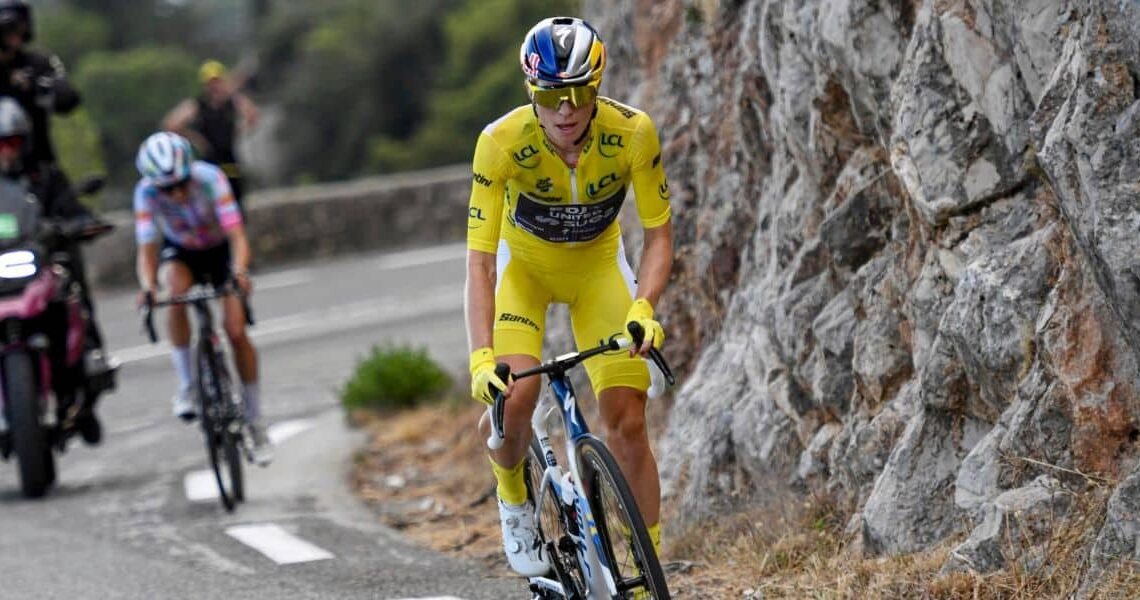
2026, meanwhile, featured the emergence of Lorena Wiebes as the sport’s top durable sprinter; an audacious solo breakaway that earned the Yellow Jersey; Marlen Reusser’s flatlander’s threat to the overall; what’s being called the strongest climbing performance in the history of women’s cycling — and, yes, beef.

That’s my case.
On the men’s side?
Take 2020, when a 21-year-old Tadej Pogačar overturned Primož Roglič’s lead in a final-stage time trial up La Planche des Belles Filles, flipping the whole race on the second-to-last day. It’s the gold standard for modern men’s Tour drama. Or go back to 2019, when Julian Alaphilippe held yellow deep into the Alps before a hailstorm on the Col de l’Iseran short-circuited the stage and handed the race to a 22-year-old Egan Bernal: chaos and a changing of the guard in one afternoon.

Both are genuinely great Tours. Neither had this: four different riders in yellow, a real four-way threat to the final podium heading into the last stage, a fearless, mid-race, lead-earning performance up one of the sport’s most iconic ascents, and a blocking controversy the UCI still hadn’t resolved by the morning of the finale. Both of those men’s editions, for all their drama, still came down to the strongest climber distancing the field. Nothing wrong with that, but it’s not the same as a leader losing the race to a single moment rather than a mountain, or a podium spot changing hands on a crash on the final descent, or two rivals still sniping at each other on the start line of the last day (and possibly, based on some video footage, into the stage).
And compare it to the recent run: Pogačar’s 2024 demolition (won by over six minutes) and his 2025 repeat, wrapped up by stage five. Even the genuinely great ones, like 2022 and 2023, Pogačar versus Vingegaard, were, in the end, two supermen trading blows in the high mountains. Compelling. But this year’s women’s race had all of that, plus contention deep into the ranks, and a real race between the sport’s two most electric riders (and personalities).
It’s not a fair comparison, contrasting nine days to twenty-one. But judged on drama, stakes, and the raw stuff that makes a bike race worth watching, the women just set a new standard.
And Kasia had the class to make amends after the race.
RACE NEWS
Vuelta a Burgos 2026: Gall Holds His Nerve on Lagunas de Neila

Felix Gall came into the final stage of the Vuelta a Burgos with the thinnest of cushions: six seconds over Giulio Ciccone, seven over Oscar Onley. The 137-kilometer queen stage from Caleruega finished atop Lagunas de Neila, the hardest climb of the race, on the one day the overall was always going to be settled by legs rather than tactics.
Gall’s Decathlon CMA CGM team did the early work, delivering their leader into the finale in position before the Austrian went on the attack himself inside the final three kilometers. It briefly looked decisive: only Ciccone and Onley could follow when Gall first broke the group with two kilometers to go. But the move didn’t stick. Pablo Torres, Giulio Pellizzari, Enric Mas, and Mathys Rondel clawed back on with under two kilometers left, dragging the whole GC group back together and reopening both the stage win and the overall.
In the end it was Pellizzari who had the sharpest kick, launching just inside the final 1.2 kilometers to take the stage. But the overall was never really in doubt behind him: Onley and Gall crossed together, three seconds down, and that was enough. Gall held on to win the general classification by five seconds over Onley, with Ciccone third at twelve.
It’s a satisfying result for Gall, who’d already served notice with a stage win of his own on stage 3, and confirms his climbing form heading into the back half of the season. For Onley, a runner-up finish after a week of persistent close calls (he’d also taken stage 2) is more evidence he’s shaping into one of the more reliable stage-race threats on the calendar. Pellizzari, fourth overall, leaves Burgos with the most eye-catching individual result of the week even without the jersey to show for it.
Tour de Pologne 2026: Tudor’s Perfect Sunday

The 83rd Tour de Pologne came down to 12.5 kilometers, and almost nobody expected the name that ended up on top.
Marco Brenner arrived at Sunday’s finale in Wieliczka fourth overall, well off the radar of most GC previews, which had settled on a three-way scrap between overnight leader Christian Scaroni, stage 6 winner Louis Barré, and Bart Lemmen. All three had legitimate claims: Scaroni had taken yellow after the race’s only true mountain stage, to Kocierz Resort, while Barré had backed it up with a stage win of his own the day before the finale.
None of it survived the time trial. Scaroni, never a threat against the watch, shipped 47 seconds and tumbled to seventh. Barré cratered to 34th on the stage. Lemmen slid to fifth. Brenner, meanwhile, quietly rode himself into yellow with the seventh-fastest time of the day. It was enough, on a day when the entire GC group was separated by barely a minute overnight, to flip the whole race. He won by ten seconds over a rapidly-closing Finn Fisher-Black, with Ivan Romeo third at sixteen.
It capped a complete day for Tudor Pro Cycling: teammate Stefan Küng, who missed the spring after a serious crash, took the stage win itself, his first victory for the team, and his first of any kind since late 2024. Between the two of them, Tudor had both ends of the Wieliczka finale locked down.
For Brenner, a 23-year-old German still without a Tour de France start to his name, it’s the first stage-race GC title of a career built so far on top-five finishes and quiet consistency. He didn’t win a single stage all week. He didn’t need to; he just needed the discipline to stay close enough, long enough, for one time trial to do the rest.
Leadville Course Altered Due to Wildfires

This one seems worth making an exception for in this mostly-road publication: Leadville Trail 100 MTB organizers Life Time have announced that the iconic race’s course will be modified due to ongoing wildfires in the region.
Known as The Race Across the Sky, Leadville’s August 15, 2026 edition will follow a route that closely tracks the traditional course, covering 9,916 ft of elevation across 102.1 miles. However, the course will not ascend the classic Powerline Climb.
The following areas were impacted by the Willow Fire and will not be featured:
- Hagerman Pass Road
- Sugarloaf Mountain
- Powerline
Athletes will rejoin the original course at the bottom of the Powerline Descent, before heading into the Outward Bound aid station at mile 22.7. Riders will then ascend the iconic Columbine climb before heading back to town on the famous out-and-back course.
View the full course here.
More Severe Weather, Another Course Change: La Vuelta Modified Stage 20
Alto de Hazallanas is out. Puerto de El Duque is in. La Vuelta has confirmed a change to its penultimate stage after landslides, triggered by severe weather back in February, wrecked the access road to Hazallanas, ruling it out on safety grounds.
The good news for GC hopefuls hoping for late fireworks: organizers say the substitute climb, a Vuelta first, keeps the stage’s teeth intact. Working alongside local authorities, they’ve built a route that mirrors the original almost stage-for-stage, and the Puerto de El Duque ascent even folds into the same final section riders would have faced on Hazallanas.
The updated profile has the peloton over Puerto de El Purche twice, Puerto de El Duque once, then onto the first-ever summit finish at Collado del Alguacil. Distance is barely affected, and race organizers maintain the difficulty holds up against the route unveiled back in December.
La Vuelta extended thanks to local authorities and the organizations who helped pull the alternative together on short notice, calling it the safest path to keeping the stage on the calendar.
TEAM, RIDER AND CYCLING NEWS
After “Lost Year,” Sarah Gigante on the Mend

Sarah Gigante was the biggest surprise in the mountains at the 2025 Tour de France Femmes, finishing second on the Col de la Madeleine, but was knocked off the podium in the final stage. It turned out to be her last race before a broken femur sidelined her for a year.
“She had another operation just under two months ago, but she is now training at full intensity again,” team manager Stijn Steels explains to Wielerflits . “I hope she can still compete this year. She trained on the rollers for a very long time, because naturally she absolutely could not afford to fall again. But now that bone is stable, she is not in pain, and she is training as she should.”
Riding the Tour de France Femmes was indeed the goal for Gigante and AG Insurance-Soudal over the past few months. “Our first rehabilitation goal was the Vuelta, to be absolutely top-notch there. Then came the Giro, but ultimately we realized that wasn’t going to work. Additional problems arose, and then we had to undergo surgery.”
“Of course, we never counted on those pins having to come back out. And yes, then you have to cancel the Tour immediately, right?” the Flemish team manager stated.
After the last operation, the pins were removed from her thigh. “Everything seems to be going well now, but we haven’t gone full throttle yet,” said Steels, who anticipates a return later this season. “I hope she can pin on a race number again, and then the important thing is that she can race at 100% again next year. She has had a lost year now.”
Almeida’s Tough Year Continues with Pologne Crash & Abandon
João Almeida, once considered “the best of the rest,” is having a very challenging year. The Portuguese rider arrived in Poland as the man to beat: a past Tour de Pologne champion looking to shake off a rough 2026 that had already cost him a Tour de France start. Instead, stage 4 delivered another gut-punch.
With 42 kilometers to go on a rain-soaked descent into Karpacz, a chain-reaction pileup swept through the peloton, taking down roughly 30 riders. Almost the entirety of UAE Team Emirates-XRG hit the deck, Almeida included. Race officials neutralized the stage for the better part of 20 minutes while medics worked, then scrapped one of the day’s remaining climbs to shorten the route before racing resumed.
Almeida got back on the bike, torn shorts, bloodied leg, and all, and gutted out the finish. But the damage was done. He and teammate Juan Sebastián Molano, along with Benoît Cosnefroy, didn’t start stage 5. UAE confirmed there were no fractures, framing it as a precautionary withdrawal so the trio could recover at home rather than aggravate things further.
It’s the latest entry in what’s shaping up to be a lost season for the 27-year-old: an early-year illness derailed his spring, he abandoned the Tour Auvergne-Rhône-Alpes in June, and he ultimately sat out the Tour de France altogether. The silver lining, if there is one, is that Almeida is still slated to line up at the Vuelta a España later this month as a lieutenant for Tadej Pogačar’s bid to complete his grand tour collection. Whether his body cooperates is, at this point, anyone’s guess.
Oh Gianni: Moscon Receives Yellow Card (Again)

Gianni Moscon rolled across the finish line of the third stage of the Vuelta a Burgos, but he is not listed in the results: The much-discussed Italian has been disqualified.
The jury report indicates that Moscon was booted for a breach of UCI Rule 2.12.007 – 8.2.1, which is either inappropriate conduct in the race or towards other riders [or, likely, both].
What Moscon actually perpetrated is unknown. The Red Bull-BORA-hansgrohe rider also received a yellow card, his second already this season.
Moscon, 32, has been controversial in the peloton for years. He was suspended in 2017 for racist remarks directed at Black rider Kévin Reza, punched French rider Elie Gesbert during the 2018 Tour de France , and threw a bike at Jens Debusschere ‘s head during Kuurne-Brussels-Kuurne in 2020 after both had crashed.
VIDEO: Stage 7 of the Tour de France Femmes avec Zwift was one for the ages. Check out Richard’s reflections here!
Gotta Comment, thought or suggestion? Drop us a line at Content@PezCyclingNews.comSee PEZ FACEBOOK here
The post EUROTRASH: Did We Just Watch the Decade’s Best Tour de France? appeared first on PezCycling News.