
There has been much discussion about the remarkable speeds now being attained in endurance sports, whether running, cycling or triathlon. Unquestionably huge advances have been made in training knowledge over the last three decades. Those gains have not been limited to professional athletes alone but these gains and the new technology making them possible are open to everyone looking to improve their performance. One of North America’s most respected coaches is Joe Friel.

Joe Friel has trained endurance athletes since 1980, including national champions, world championship contenders, and Olympic athletes in triathlon, duathlon, road cycling, and mountain biking. He is an elite-certified USA Triathlon and USA Cycling coach and holds a master’s degree in exercise science. He conducts training and racing seminars around the world and provides consulting services for corporations in the fitness industry.
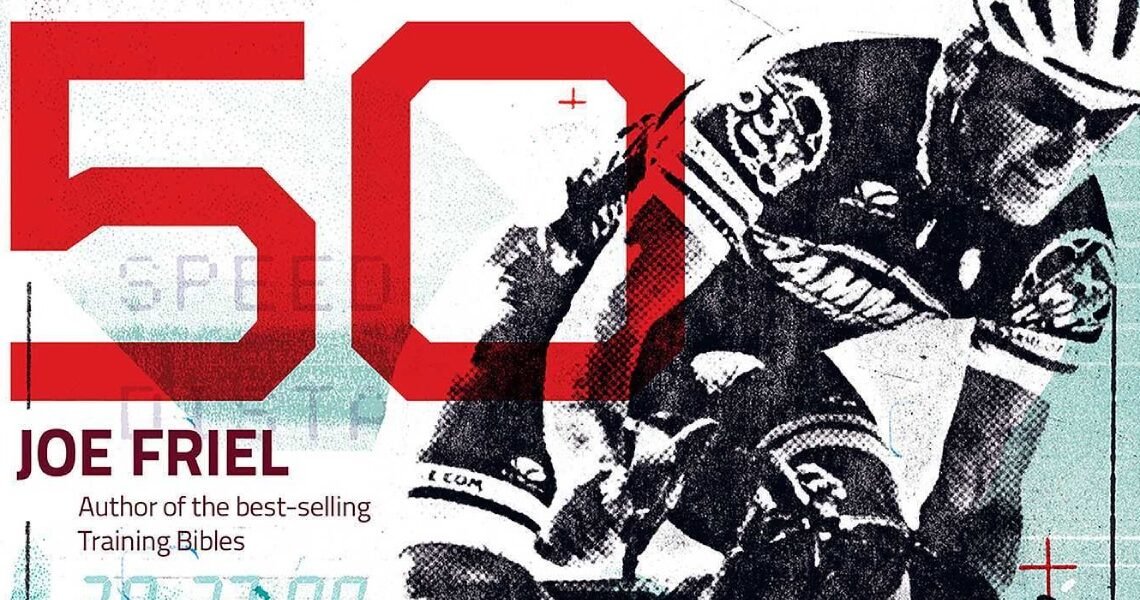
A co-founder of Training Peaks, he has written 18 books on training, including the popular “Cyclist’s Training Bible.” In Pez2015, we reviewed his “Fast After 50: How to Race Strong for the Rest of Your Life” here, which was itself a total revision of his 1998 book “Cycling Past 50.” Now in 2026 a revised “Fast After 50” was released this week, covering advances of the last decade.
Pezcyclingnews.com recently had the opportunity to interview the spry Mr. Friel, who is still putting in the mileage in Boulder, Colorada, at 83.
Pez: In your view, what has changed since 2015 in terms of training for experienced athletes?
Joe Friel: The earlier book was actually written in 2012 and released the year after. It is still selling well, and is in fact my third most-popular book. When I wrote “Fast After 50” I saw that older athletes were doing a lot of long slow distance training. As I have spoken with people and attended training camps around the world over the last two years I realize there has been a change. Athletes were still doing l-s-d workouts but adding in a lot more high-intensity sessions. It appeared, in my view, there was too much high-intensity. So the primary focus of this new edition is that this tendency has to change. I cannot condone excessive high-intensity training.
It seems that there is always a trend in one direction or another, to the exclusion of gains more easily made. The basic theme of the book is an examination of the benefits of a more balanced program and how lower intensity longer sessions are beneficial.
We also have to look at elements beyond training and how life changes impact the athlete. There are new concepts attracting attention now, such as durability, that have become hot topics more recently.
Pez: We have seen a wave of training books devoted to “older” athletes. With “Cycling Past 50” three decades ago you were a forerunner. Your current book is written for experienced athletes, rather than newcomers in their 50s who want to start structured training. Are you seeing more of these older riders who have put in consistent work over the years and are looking for the next step up.
Joe Friel: We can debate what an “older” athlete is–I thought 50 was a good place to start but it would be applicable to someone at 35 where physical changes are really beginning. While I have been meeting up and coaching people in their 50s and 60s in greater numbers this is also something that has happened in the past. For example, in the 1970s in the US there was considerable interest in getting fit by adults by who had been sedentary. This faded but now has come back as older athletes, who have been active, are looking at advances that will benefit them as they age.
I was a runner at university but after graduation there wasn’t much of an outlet to compete but we saw in the 1970s the interest in running/jogging and then cycling in the 1980s grew with Lemond and then Armstrong. Now we have the people who were active then are now in their 50s and training and competing. They have access to information that was unknown in the past. They know more about training today than I did when studying sports science at university in the 1980s!
Pez: This access to information now is remarkable. A well-known retired pro remarked that teenage riders like Paul Seixas can participate in races at the highest level thanks to this available training knowledge.
Joe Friel: When I wrote my first book for the older athlete I went to the local university library and had to spend hours searching for the rather limited material then available. In the ensuing years so many studies have been made. I can do my research now from my desktop, searching with AI, and there is so much out there now it is a bit overwhelming.
Pez: There has been much discussion of Zone 2 training. We know that pro athletes who do nothing but train all week are taking on long slow distance rides. We have also seen that there are active amateur athletes who believe that being time-limited as they are Zone 2 training is a waste of their training hours compared to the results of high-intensity sessions. What do you say to this?
Joe Friel: We can correct this quite easily. Let’s say the athlete has only four days per week to train, with an hour and a half for each session. That probably makes up most of the athletes in the country who do occasional races. We want two days a week of high-intensity training and four days per week of low-intensity. So let’s do two days a week of low-intensity Zone 1 and 2 workout. On the other two days take 45 minutes for Zone 1/2, then the next 45 minutes at Zones 3/4/5. So that would give the four days of 90 minute sessions covering the low- and high-intensity requirements. It is a way of making the best use of your time.
Pez: In addition to overtraining at high-intensity, what other issues do you see with amateur athletes?
Joe Friel: Oh, that’s a long list! But the one that stands out is ignoring VO2 max. This is really a key thing as it typically declines after age 35 by 1% per year. Movement is key and going out one a week is not going to help here. But maintaining a balance between low- and high-intensity is the goal–you can go at low intensity for hours but only for minutes at high effort. Looking at a workout from a decade ago–if you recorded it with a power meter–and comparing it to today will show if your decline is more than 10% you need to concentrate more on maintaining your VO2 max. This can be done with more activity–crosstraining, walking with your spouse, riding your bike more.
Pez: What do you see as the current hot topics in endurance sport?
Joe Friel: Two of them would be nutrition, which has changed a great deal very quickly, and now durability. This latter is being examined by scientists and coaches to answer the question “How can we improve performance late in a long (over an hour) race?” Durability began to be studied in 2019 and is now the subject of a lot of recent research.
“Fast After 50” covers these topics in-depth, as well case studies of “superagers” who have excelled in their sport at an advanced age, along with great advice on cross-training. Useful advice for all endurance athletes (not just competitive racers), whether cyclists, triathletes, swimmers, runners or those ultra bike packers Clearly written and very comprehensive, it is a worthwhile addition to anyone’s training library–no matter if you are 35 or 50 or 83!

“Fast After 50: How to Race Strong for the Rest of Your Life”
by Joe Friel
352 pp., softbound (also available as an e-book)
Velopress, Brooklyn, NY, June 2026
ISBN 978-164-604-8366
Suggested price: US$22.99/C$29.99
*** “Fast After 50” 2nd Edition is available from AMAZON.COM HERE. ***
The post PEZ Bookshelf: “Fast After 50” 2nd Edition appeared first on PezCycling News.